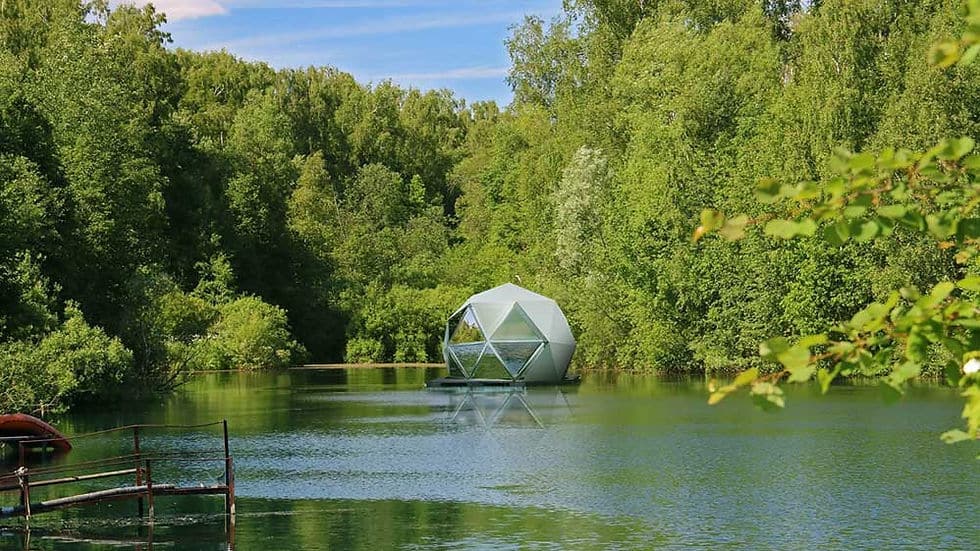
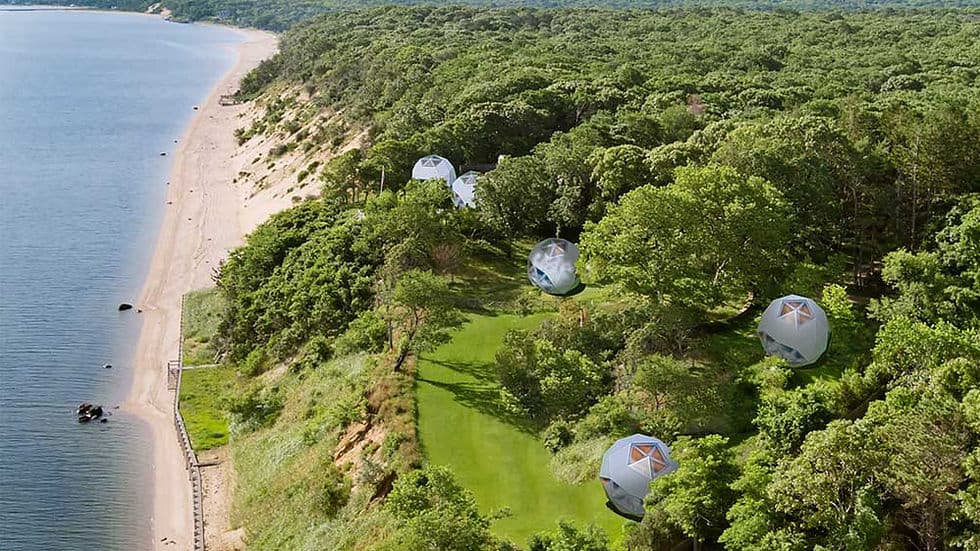
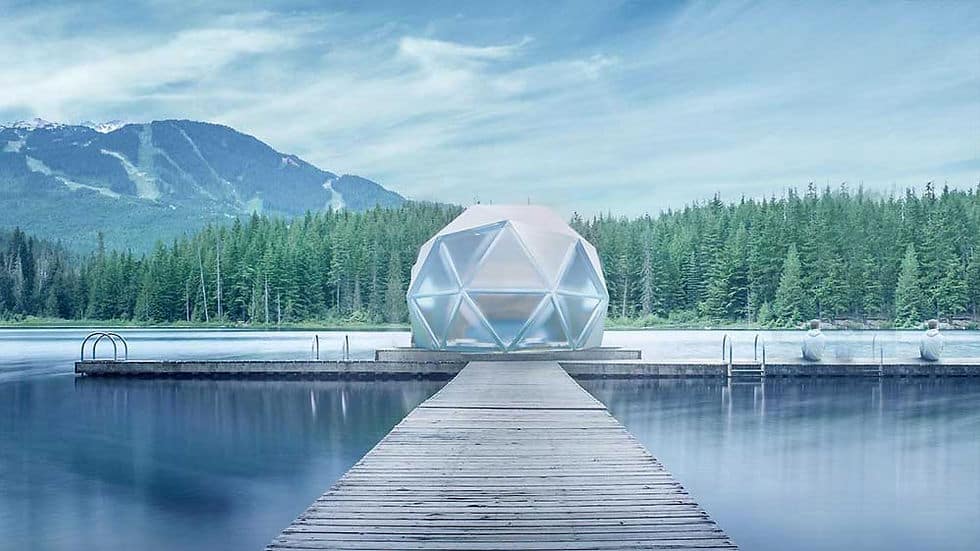
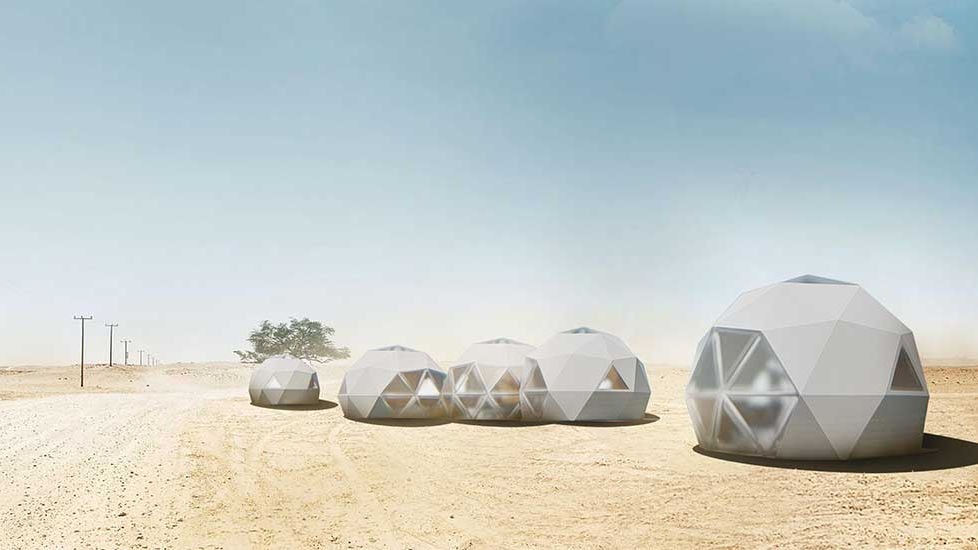
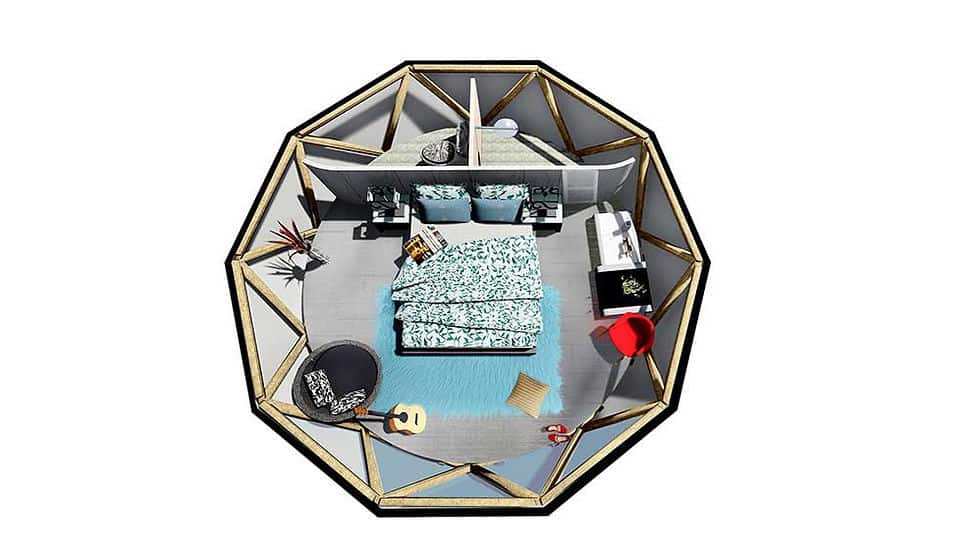
The round form is not only visual. It creates a continuous interior volume that feels larger than a typical box cabin of the same size, and it sits lightly in outdoor settings—lakeside plots, forest clearings, vineyard stays or resort clusters. Operators can place one unit for a private guest cabin, or repeat the same module across a site for a consistent rental product.
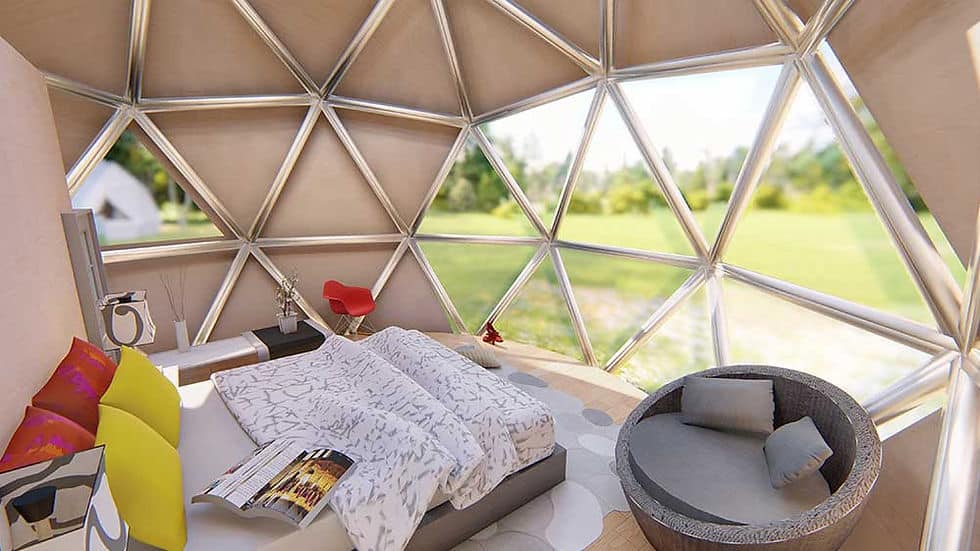
Inside, the plan keeps daily needs within a few steps. A sleeping area with one bed anchors the rest zone; a small living area with a sofa supports reading, conversation or morning coffee; and a full bathroom covers shower and toilet without leaving the unit. Large, well-placed windows pull in daylight and frame outdoor views, so the compact interior still feels open and connected to the landscape.
Because the cabin is modular and relatively lightweight, it is easier to transport and install than a conventional small house—useful on remote land, temporary hospitality projects, or sites where a short build window is required. Guests get a self-contained stay; owners get a repeatable unit that is faster to deploy than timber cabins built entirely on site.
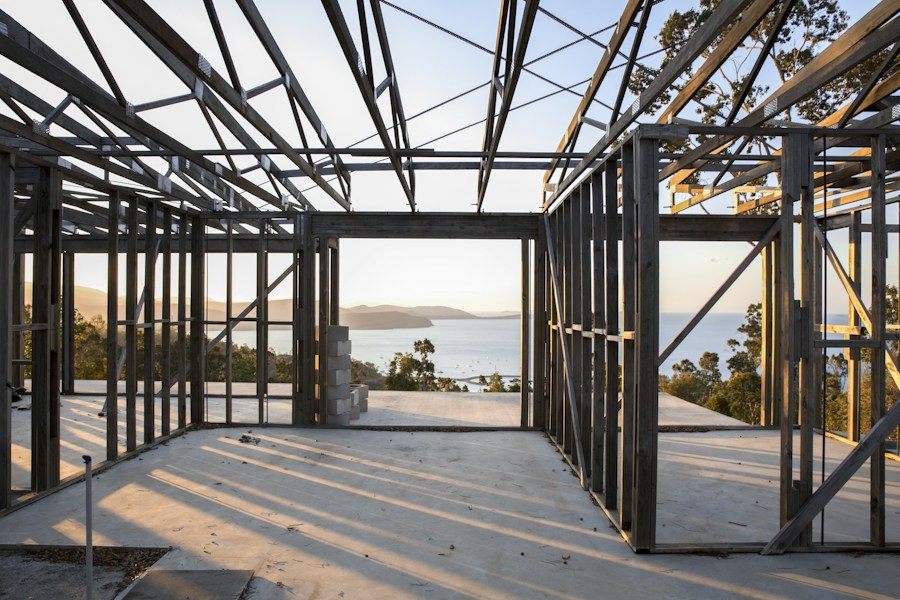
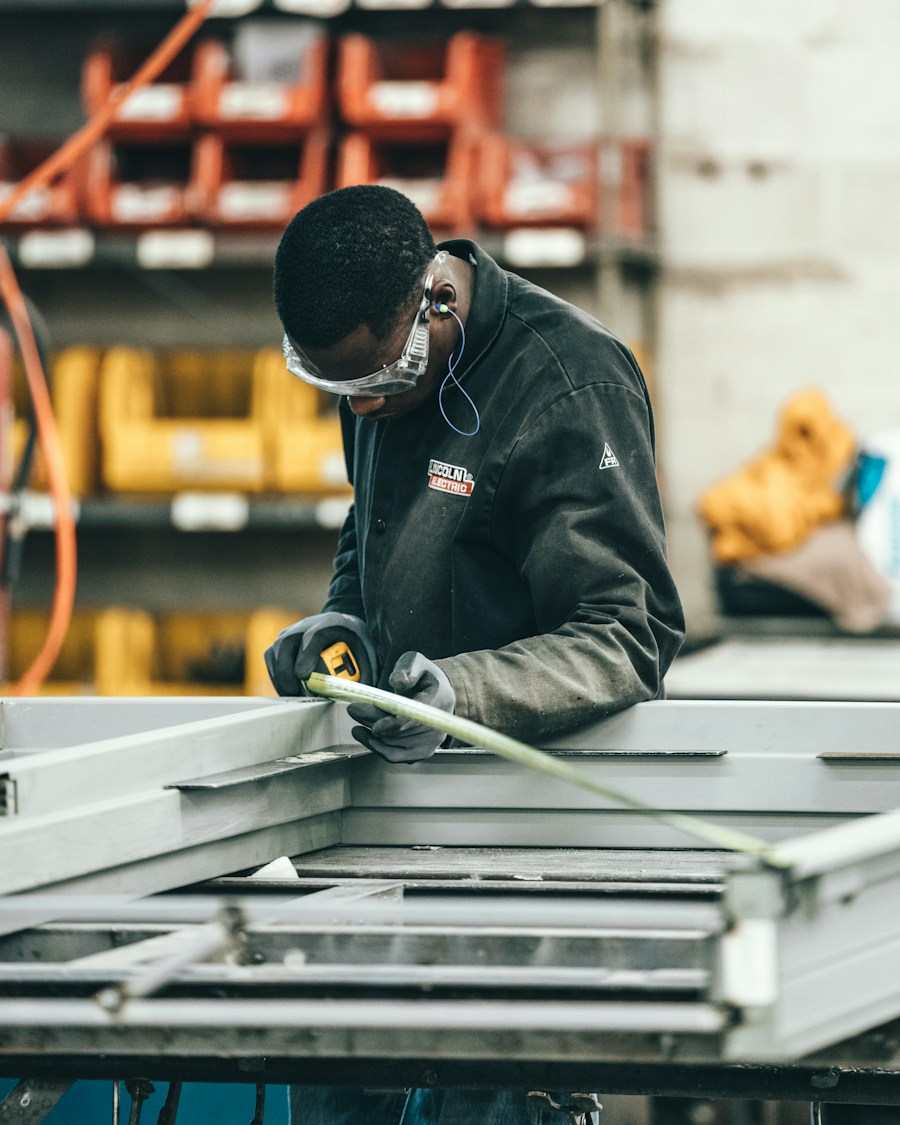
The structure uses cold-formed steel (CFS) framing. Factory-cut steel stays accurate, will not warp or crack like timber, is non-combustible, and is fully recyclable. That combination suits outdoor hospitality and secondary living uses that need durability with a smaller environmental footprint.